
Medical Weight Wellness in Frisco, TX
Frisco Beauty Nurse offers a supportive, medically guided weight-wellness program built around your health history, your goals, and your day-to-day life. The focus is not a quick fix—it’s a safer, more sustainable plan that supports long-term progress.
Your program may include medical consultation, nutrition and lifestyle counseling, education on appetite and fullness cues, supportive follow-up visits, and—when medically appropriate—clinician-directed prescription options used alongside reduced-calorie nutrition and increased physical activity.
Not every patient is a candidate for prescription therapy, and not every plan needs medication. We start with screening, education, and a realistic strategy that fits your lifestyle.
Serving Frisco, Plano, McKinney, Prosper, The Colony, Little Elm, and surrounding North Texas communities.
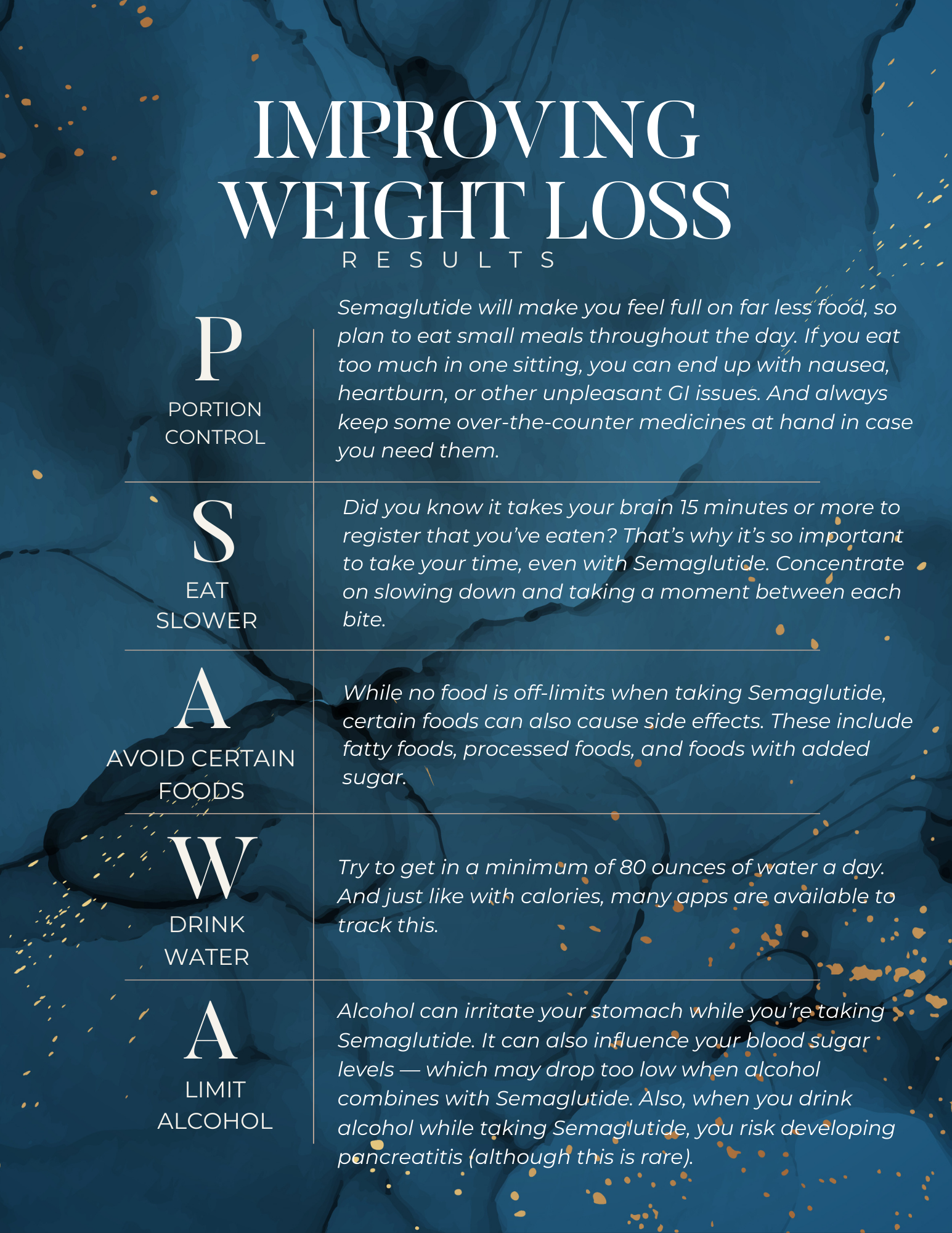
More than medication
In addition to medical evaluation, Carla’s program can include practical coaching around meals, hydration, pacing, symptom awareness, follow-up timing, and realistic maintenance habits—so your plan works in real life.
Medical review + eligibility screening
Your first visit includes a detailed discussion of your health history, medications, previous weight-loss efforts, and personal goals.
Including current medications and relevant conditions.
Clear, realistic planning based on your starting point.
Nutrition, pacing, and routine support
Weight wellness is about habits, too. We help you build structure around meals, hydration, fiber, protein, and consistency.
Supportive habits that can make the program easier to tolerate.
Portion awareness, slower eating, and sustainable routines.
Ongoing monitoring and adjustments
Follow-up visits help us review how you’re feeling, answer questions, and decide whether your plan should stay the same or be adjusted.
We review tolerability and daily-function impact.
Adjustments are individualized and based on safety and response.
Prescription options are individualized
For eligible adults, FDA-approved prescription options for chronic weight management may be discussed as part of a broader plan that also includes nutrition and physical activity. Medication is not right for everyone, and therapy choice depends on your medical history, risk factors, goals, and clinician judgment.
How the program works
We review your medical history, medications, current challenges, and weight-wellness goals in depth.
If treatment is appropriate, we explain what to expect, how follow-up works, and how to support the process at home.
You’ll return for monitoring, questions, and plan adjustments based on response and tolerability.
Practical guidance Carla may review with you
Especially when appetite changes, smaller portions can feel more comfortable than large meals.
Taking your time can help you recognize fullness cues earlier.
Hydration is a key part of tolerability and day-to-day wellness.
High-fat or heavily processed foods—and sometimes alcohol—may worsen GI symptoms in some patients.
Common side effects and supportive care
Depending on the medication and the dosing schedule, common side effects can include nausea, vomiting, diarrhea, constipation, abdominal pain, fatigue, and sometimes heartburn. If therapy is appropriate for you, we review what to watch for, when to call, and how to make the plan easier to tolerate.
Examples of supportive measures
Smaller meals, adequate protein, and not overeating may help some patients.
Hydration, fiber, movement, and clinician-guided support may be discussed if needed.
When to reach out
Contact the clinic if side effects are impacting your daily life.
Severe or worsening symptoms need prompt medical attention.
A broader wellness approach
Depending on your needs, the conversation may also include in-office support around symptom management, meal structure, protein and hydration goals, supplement support when appropriate, and long-term maintenance planning after initial progress.
Any recommendation is individualized. This page is educational and does not promise a specific outcome.
Important safety screening topics
Before any prescription therapy is considered, we review factors such as current medications, prior reactions, GI history, pancreatitis or gallbladder history, kidney issues, eye history in diabetes, mental health history, and whether there is any personal or family history of medullary thyroid carcinoma or MEN2—depending on the medication being considered.
Weight Wellness FAQs
What is a medical weight-wellness program?
A medical weight-wellness program combines clinical evaluation with counseling, education, and follow-up. For some patients, prescription treatment may also be part of the plan when medically appropriate.
Who may be a candidate for prescription support?
Candidacy depends on your health history, risk factors, goals, and the medication under consideration. Not everyone is a candidate, and some patients may do well without prescription therapy.
What happens at the first consultation?
We review your health history, medications, prior efforts, goals, and what has or has not worked for you before. Then we build a plan that makes sense for your body and your lifestyle.
What else does the program include besides medication?
Carla’s approach also includes education around meal pacing, hydration, supportive habits, follow-up visits, and realistic maintenance planning—because sustainable progress requires more than a prescription alone.
Are there side effects?
Depending on the medication, common side effects can include GI symptoms and fatigue. We review what to expect, supportive measures, and when to call the clinic.
Do you offer ongoing support?
Yes. Follow-up and reassessment are part of the program so your plan can evolve based on how you’re feeling and how you’re doing.
Medical references
FDA — Higher-dose semaglutide approval (Wegovy HD)
FDA — Tirzepatide approval for chronic weight management
FDA — Wegovy safety and cardiovascular indication summary
FDA — Concerns with unapproved GLP-1 drugs used for weight loss
Educational content only. Prescription treatment decisions should be made with a licensed clinician after a full medical review.
Book Your Weight Wellness Consultation
Tell us a little about your goals and we’ll follow up to help you get started.